Logo design
Should a logo have a tagline?
Decide when to use a fixed logo and tagline lockup, when to write the tagline separately, and how to proof both at real sizes.
The short answer
Keep the primary logo usable on its own. Make a fixed tagline lockup only for placements where the line helps and remains readable. If the wording changes by campaign, language or layout, put it in the surrounding copy instead.
Decide what the line does
A descriptor tells a new audience what the company does. A tagline expresses a lasting idea. A campaign line is temporary. For an imaginary repair studio called ORO, “Bike repair” identifies the service; “Ride another mile” is a message. Test which one is actually useful at the point of contact. Do not bake a temporary offer into permanent artwork, and do not drop a qualifier the organization needs in order to be identified. If that qualifier stops reading, make room for it instead.
Build a pair, not a dependency
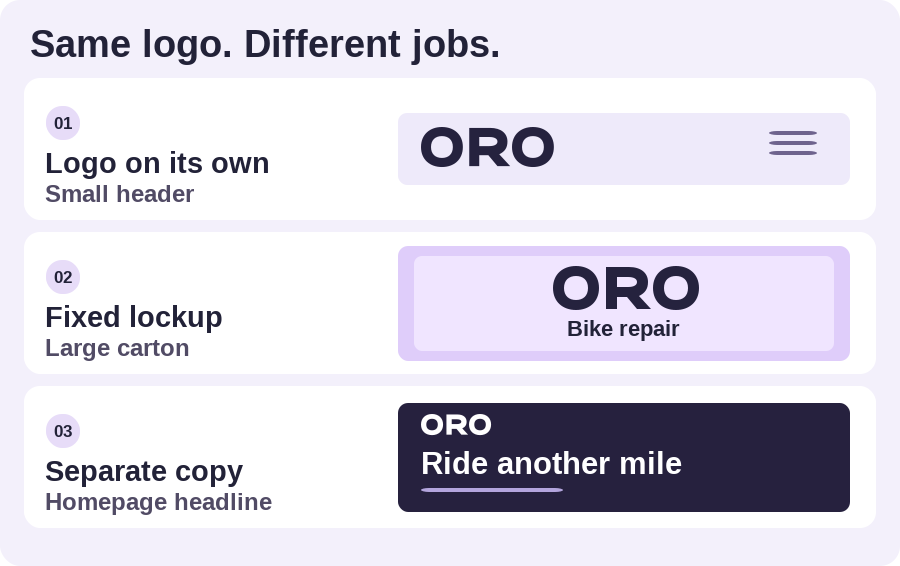
Start with one wordmark that needs no line underneath it. If ORO’s storefront benefits from the descriptor, draw one approved arrangement for it: size, weight, optical alignment and vertical gap. Keep the name dominant and set the line in a weight that holds up at its intended size. Compare left and centered alignments at the same scale. Choose the arrangement that reads as one unit without making the words look like part of the name.
Proof a near miss, not just the hero
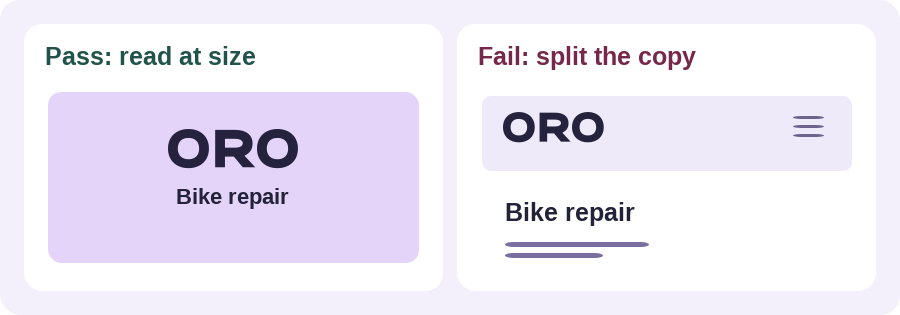
Put both versions into the smallest header, a real package panel and one-color output. Judge the screen at normal zoom and print a full-size sample if print is in scope. Ask someone unfamiliar with the project to say what it reads, not whether they like it. If the line fades, closes up, or needs extra width, switch to the primary logo and put the useful words nearby. Record the first passing width separately for screen and print, including the background and process. There is no universal starting size.
Keep translated and changing words editable
If the line is meant to be read online, use real page text beside the image when the layout or wording can change. It can wrap, reflow and translate without swapping the logo. Test the longest approved translation before approving any fixed localized lockup. Never squeeze a translation to fit the English asset. Keep one line of text only if it works in the actual layout; otherwise use separate live copy.
Handoff one simple decision rule
Give the client the standalone logo, the approved lockup only if it earned a place, and the editable line of copy in the guide. Label the placements and include a do-not-use example. For ORO: use the wordmark alone in navigation, use the approved lockup on the carton where the proof passed, and put changing campaign words in the layout. Brand references below show two independent examples, not a template to copy.
Further reading: Phrase Brand Guidelines · Medline Branding Guidelines: Tagline
PUT IT INTO PRACTICE
Ready to prepare your pack?
logopack.app turns existing SVG artwork into an organized logo package. Preview your files, choose the available export options and check the result before handing it over. Exporting your own logo or icon files requires Pro.
Start with the logo pack generator, explore the sample ZIP, or compare the current plans.
Open generator